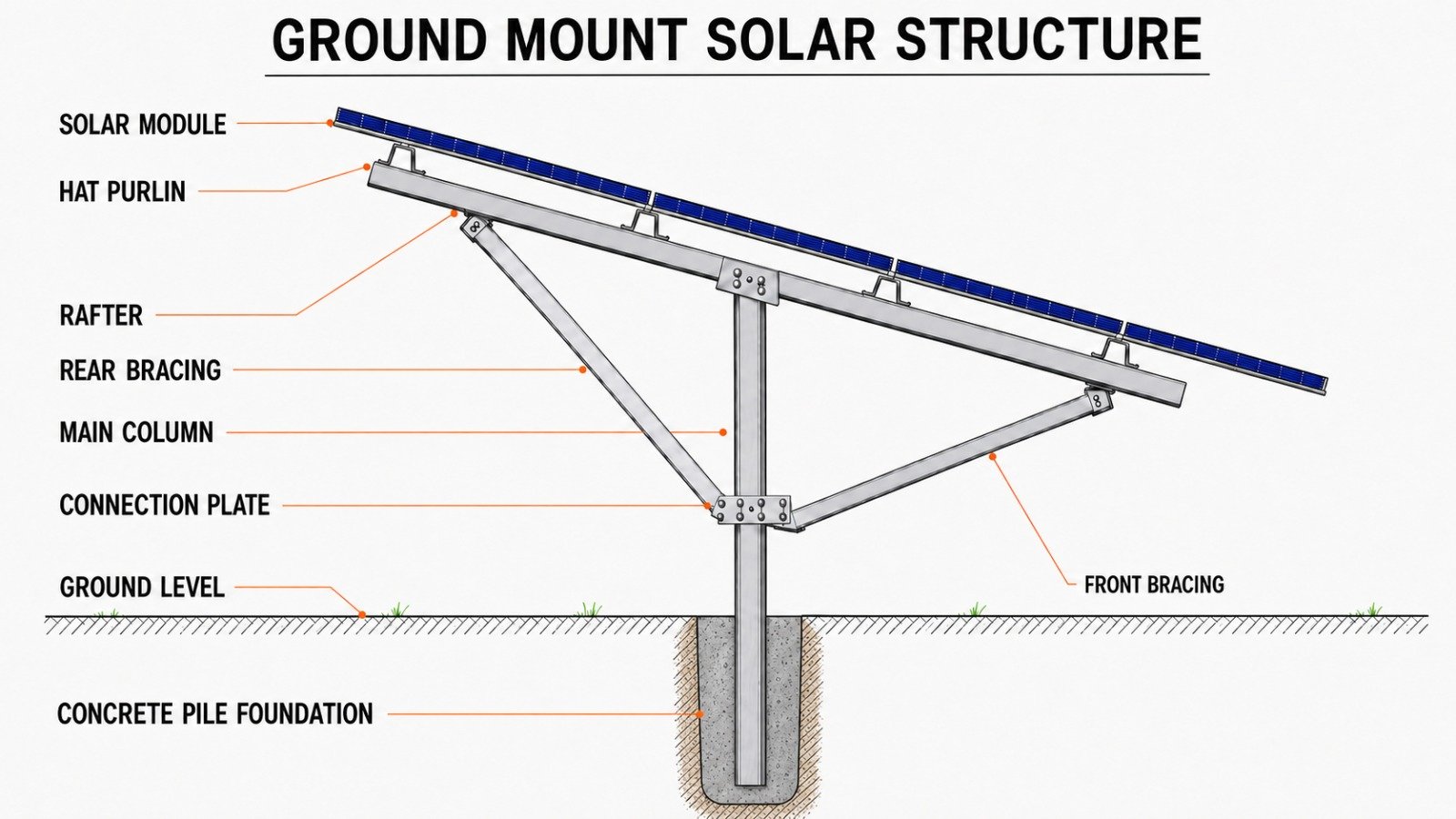
The foundation is the part of a solar structure nobody sees — and the part that holds everything else in place. Choosing the right foundation type affects cost, installation speed and long-term stability. Here are the three options used most often for ground-mounted solar in India.
1. Driven piles
Steel posts are hammered straight into the ground with a pile-driving machine.
- Pros: very fast to install, no concrete curing time, little site disturbance
- Cons: needs suitable soil; rocky or very hard ground can stop the pile or damage it
- Best for: large sites with consistent, medium soils
2. Screw piles
Steel piles with a helical blade are screwed into the ground, a bit like a large screw.
- Pros: good resistance to uplift, quick installation, can be removed later
- Cons: higher material cost per pile; not suited to very rocky ground
- Best for: softer soils and sites where uplift resistance is critical
3. Concrete foundations
Posts are set in cast-in-place concrete, either in bored holes or in pedestal blocks.
- Pros: works in almost any soil, including rocky ground; well understood by site teams
- Cons: slower — needs excavation, formwork and curing time; more labour and material
- Best for: difficult or variable soils, and where pile-driving equipment is not available
Let the soil decide
The right answer always starts with a geotechnical investigation. Soil type, bearing capacity, groundwater level and the presence of rock all affect the choice. Pull-out tests on sample piles confirm that the chosen design performs as calculated before full-scale installation begins.
Skipping the soil investigation to save a few days can cost months if foundations fail testing later.
Protecting the foundation from corrosion
The section of a post at ground level is the most exposed to moisture and corrosion. The coating specification should account for soil conditions, especially in saline or waterlogged areas.
How BRPL helps
BRPL supplies columns and posts as part of complete MMS packages, with members engineered to suit the foundation design and coatings selected for the site's corrosion conditions.