Solar modules get most of the attention, but every panel on a solar farm sits on a steel frame that has to survive wind, rain, heat and corrosion for 25 years or more. That frame is the Solar Module Mounting Structure (MMS). Get it right and the plant runs quietly for decades; get it wrong and you face misalignment, corrosion and expensive repairs.
What an MMS does
An MMS holds solar modules at the right tilt and orientation, and safely transfers their weight — along with wind and seismic loads — down into the ground. On a utility-scale project it must also be fast to install across thousands of tables and economical in steel.
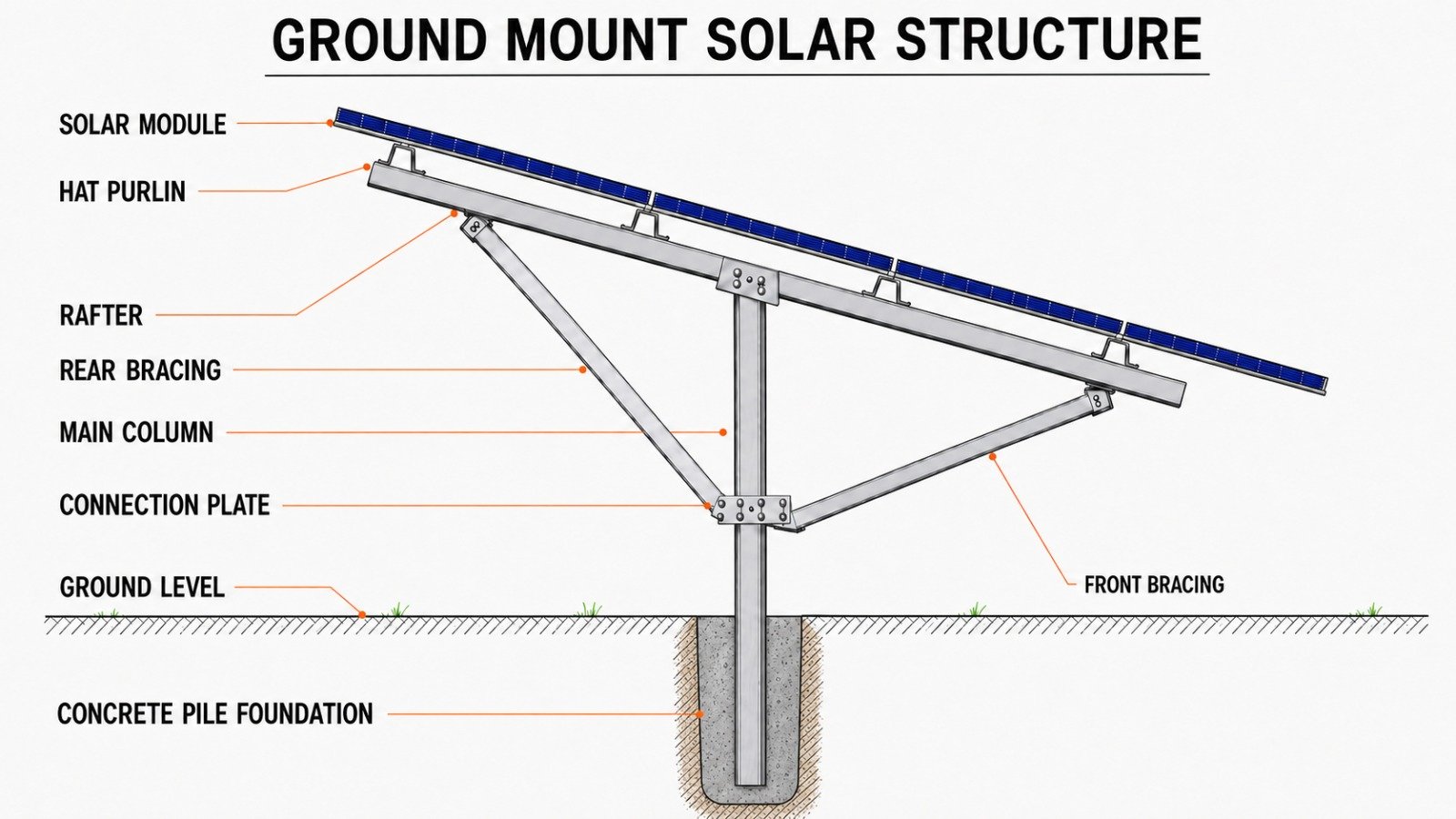
The main components
- Foundation / piles (columns) — driven, screwed or concrete-founded posts that anchor the structure to the soil.
- Rafters — inclined members that set the tilt angle and carry the purlins.
- Purlins — members running across the rafters; modules are clamped or bolted onto them.
- Bracing — diagonal members that stiffen each table against wind and lateral loads.
- Fasteners and clamps — bolts, nuts and module clamps, which must match the corrosion protection of the main members.
Designing for site-specific loads
No two sites are the same. A sound MMS design starts with:
- The design wind speed of the location, as per the applicable Indian Standard
- Soil conditions from a geotechnical survey, which decide the foundation type and depth
- Module size, weight and layout — portrait or landscape, rows per table
- The corrosion environment — coastal, industrial or inland
The cheapest structure on paper is rarely the cheapest over 25 years. Design for the site, not just the tender price.
Materials and coatings
Steel grade and coating together decide strength and service life. Common protection systems include hot-dip galvanizing (HDG), pre-galvanized GI, zinc-aluminium-magnesium (ZAM / Posmac / Magnelis) and Galvalume. We compare them in detail in our coating guide.
What to check before placing an order
- Structural design calculations and drawings for your site's loads
- Steel grade and coating thickness, backed by Mill Test Certificates (MTC)
- Manufacturing capacity to meet your delivery schedule
- Quality certifications such as ISO 9001, ISO 14001 and ISO 45001
- Ease of installation — pre-punched holes and minimal site welding
How BRPL builds MMS
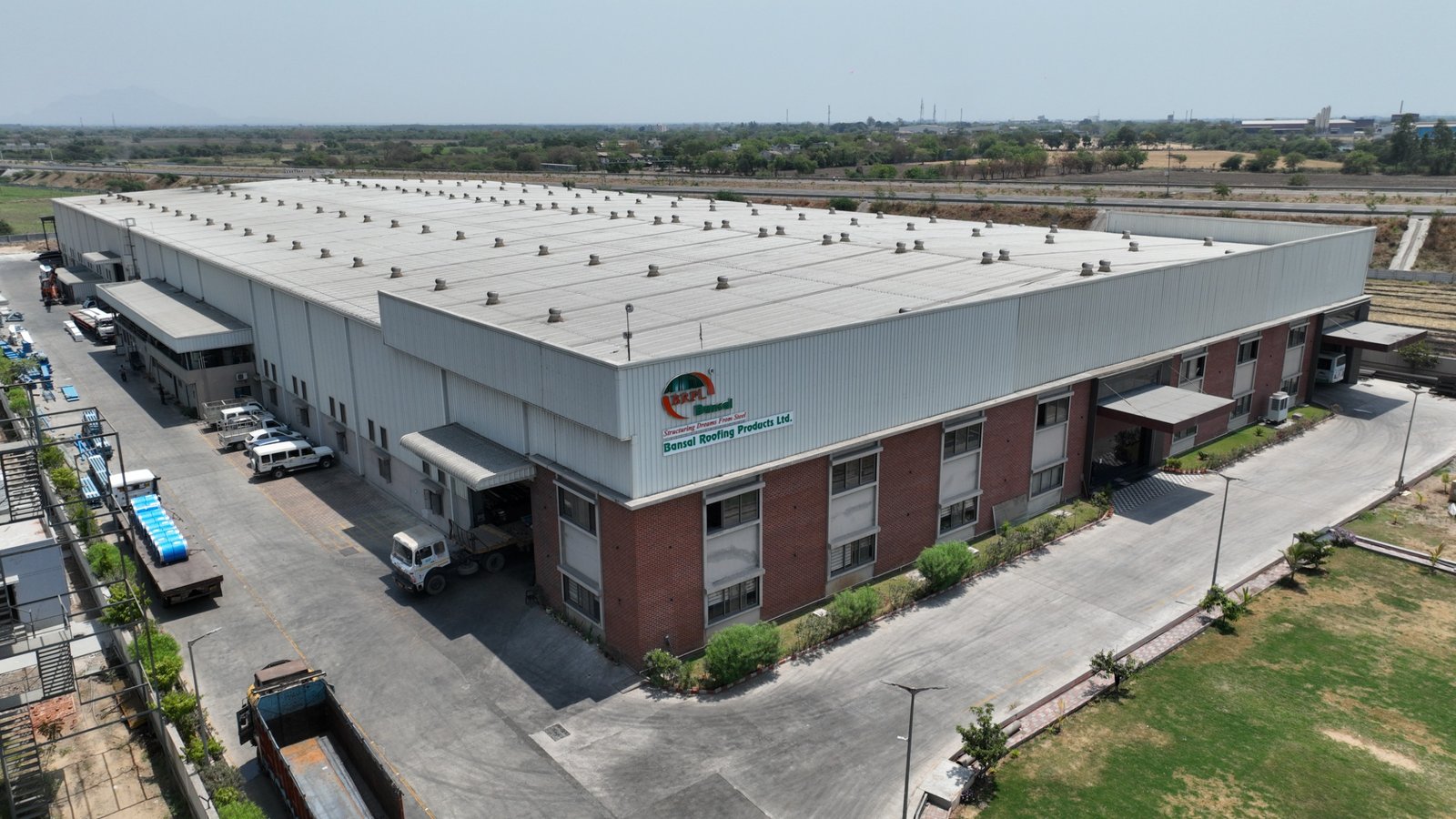
BRPL manufactures MMS on high-speed roll-forming lines at its 3 lakh sq. ft. facility in Vadodara, backed by over 17 years of experience in steel infrastructure. Every material is supplied with a valid MTC and verified against applicable IS standards and project specifications.