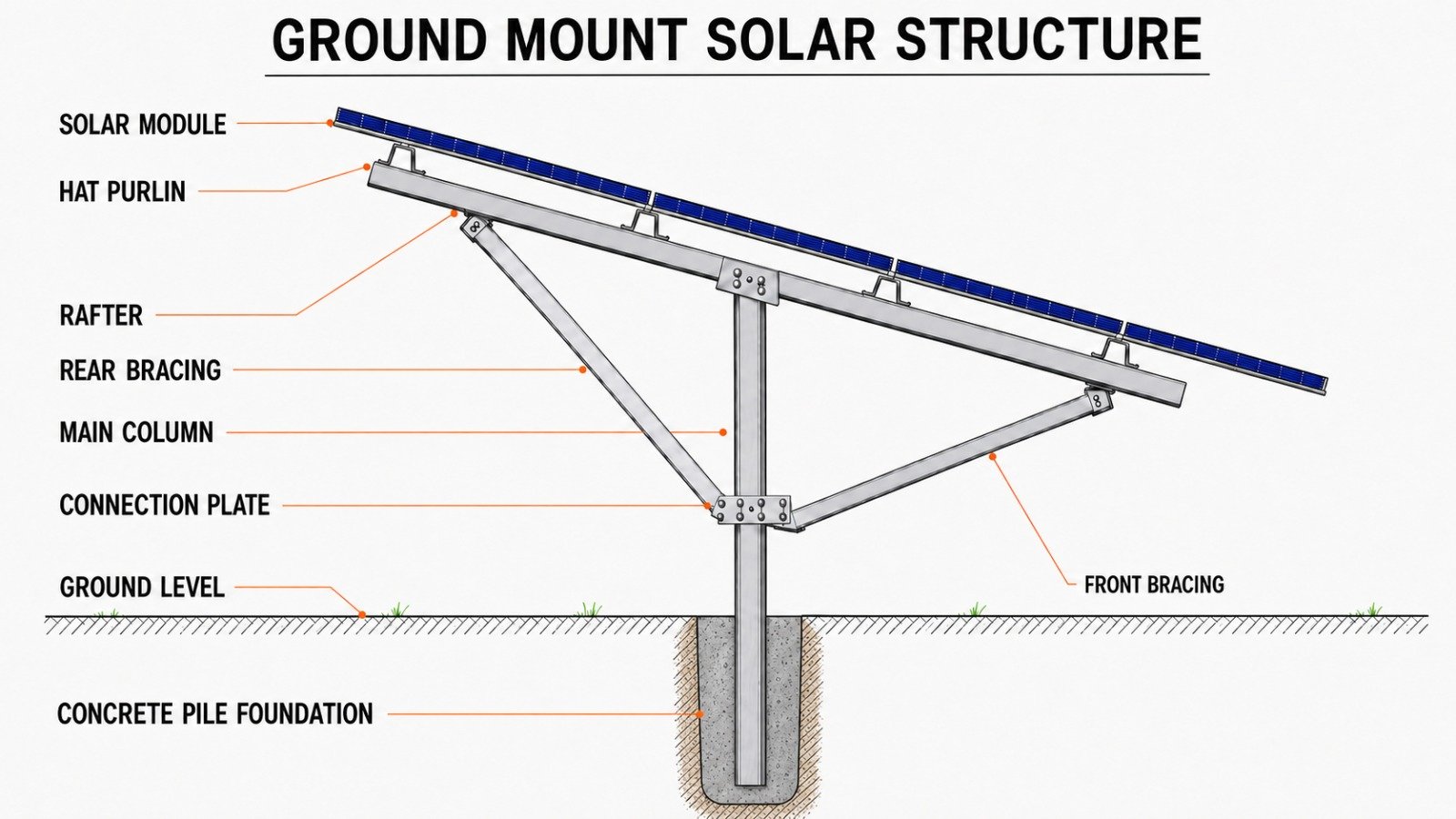
A solar structure is expected to stand for the full life of the plant — typically 25 years or more. Steel strength matters, but in practice it is the coating that decides how long a structure lasts before corrosion sets in. Here is a practical comparison of the four protection systems used most often for solar MMS.
Quick comparison
| Coating | Typical specification | Best suited for |
|---|---|---|
| HDG (hot-dip galvanized) | 80–120 μm | Robust long-term protection; zinc is applied after fabrication, so cut edges and holes are covered too |
| GI (pre-galvanized) | 80–275 gsm | Standard protection for general, milder site conditions |
| ZAM / Posmac / Magnelis | 250–450 gsm | High-corrosion environments such as coastal belts, industrial zones and saline soils |
| Galvalume | AZ150 | A balance of durability and cost |
Hot-dip galvanizing (HDG)
In HDG, fabricated steel members are dipped into molten zinc, so every surface — including holes and cut edges — is coated. It is a proven choice for long-life projects. The extra process step adds time and cost compared with pre-coated steel.
Pre-galvanized GI
GI sheet is coated before roll-forming, which makes it fast and economical to produce. It suits inland sites with mild conditions. Because cutting and punching happen after coating, the coating mass should be chosen with the site in mind.
ZAM / Posmac / Magnelis
Zinc-aluminium-magnesium coatings offer considerably higher corrosion resistance than plain zinc of the same weight, and they offer better protection at cut edges. For coastal or industrial sites, ZAM is often the most cost-effective option over the life of the plant.
Galvalume
Galvalume (aluminium-zinc, AZ150) combines aluminium's barrier protection with zinc's sacrificial protection. It is a sensible middle ground where conditions are moderate and budgets are tight.
Rule of thumb: match the coating to the site's corrosion category first, then optimise for cost — not the other way round.
Don't forget the fasteners
A structure is only as durable as its weakest part. Bolts, nuts and clamps should carry protection compatible with the main members, to avoid early rusting at joints.
Verified with Mill Test Certificates
At BRPL, every material is supplied with a valid Mill Test Certificate and checked against applicable IS standards and project specifications, so the coating you specify is the coating you receive.