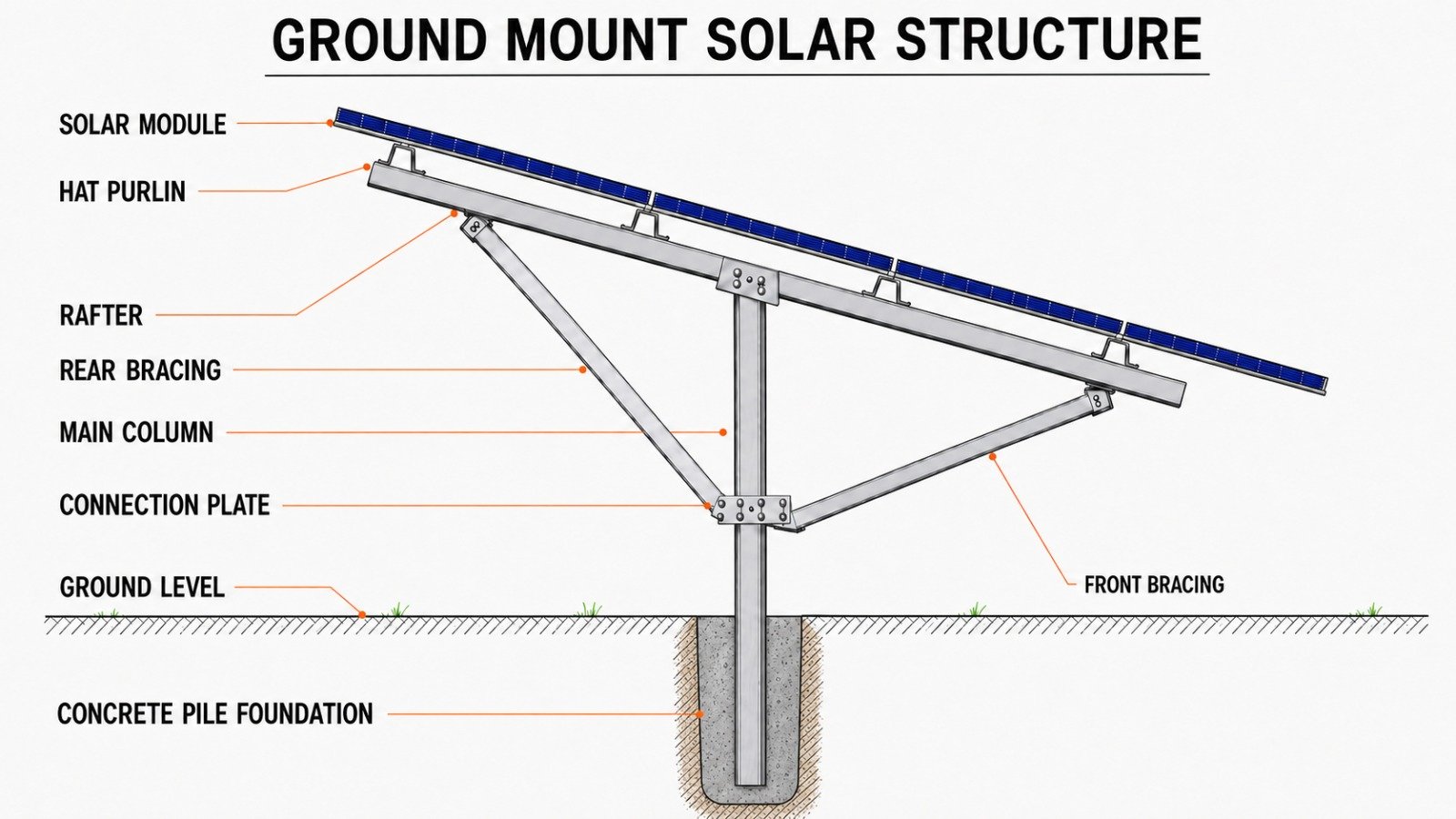
For most ground-mounted solar plants, the load that decides the size of the steel is not the weight of the modules — it is wind. Solar tables behave like large inclined plates, and wind can push down on them or try to lift them off the ground. A structure that ignores this is a structure at risk.
Why wind governs
A module weighs relatively little for its area. Wind pressure, on the other hand, acts on the full surface of every table. On an exposed site, the uplift from wind can be several times larger than the self-weight of the modules and steel combined. That uplift has to be resisted by the connections, the members and, finally, the foundation.
The Indian Standard for wind
In India, wind loads on structures are calculated using IS 875 (Part 3). The code gives a basic wind speed for each region of the country and factors that adjust it for:
- Terrain — open flat land sees stronger wind than a built-up area
- Height of the structure above ground
- Topography — hills and ridges can speed up the wind
- Design life and risk of the structure
What changes in the design
- Edge and corner tables see higher wind pressure than tables inside the array, so they may need stronger members or closer bracing.
- Tilt angle affects both energy yield and wind load — a steeper tilt catches more wind.
- Foundation depth is often set by uplift, not by downward load.
- Connections must be checked for reversing loads, since wind can act in both directions.
A structure is only as strong as its weakest bolt. Wind design is as much about connections as it is about member sizes.
Don't over-design, either
Using heavier steel everywhere "to be safe" adds cost across thousands of tables. Good engineering puts the strength where the loads are — heavier at the edges, lighter inside — and keeps the plant economical.
BRPL's approach
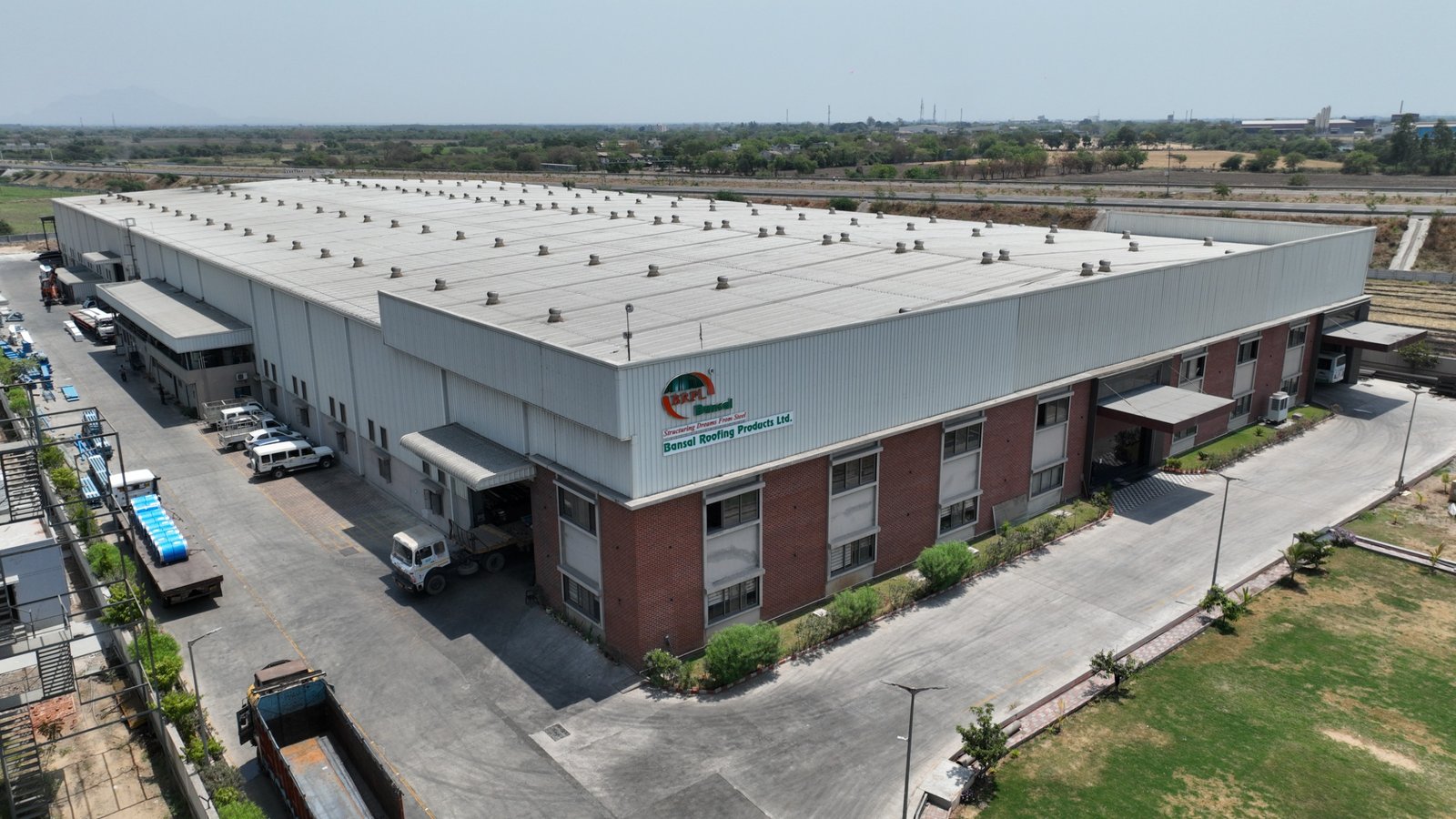
BRPL designs each MMS for site-specific loads, weather conditions and long-term structural performance, so that every rafter, purlin and foundation does its job without wasting steel.